Equipment: which fence suits the job you need done
Settle what the fence has to do first. The material, the height and the gate follow from that, and the quote comes last.
The job comes before the material
We set out to answer one plain question: which fence type suits the job a homeowner needs done? This guide covers five types, vinyl, cedar or other wood, aluminum, chain link and agricultural fencing. Each one is good at some jobs and poor at others, and the best choice is usually the one that matches what the fence has to do, not the one that photographs best.
The six questions below are the ones that change the answer most. Answer them about your own yard. The result is a starting point, not a substitute for the checks that come before any post goes in: your town's zoning, your survey and any buried utilities. Those checks are on the Safety Guidance page.
Six answers, one fence type
Pick one answer to each question and press Next. The result names the fence type that fits best, the reasoning behind it, the close second and what would change the choice.
The answers assume a standard residential lot in Massachusetts. The result scores your answers; it does not check your town's zoning or height limits, the survey or buried utilities, and it gives no prices. The figures are cited beside each one.
The close second
What would change the choice
Reading without the interactive form? The same six questions and their outcomes, as plain text:
- What is the fence for? Privacy points to vinyl or wood. Keeping a pet in or marking a boundary points to chain link or aluminum. Enclosing livestock or a field points to agricultural fencing. Looks alone point to vinyl, aluminum or wood.
- How much upkeep will you do? None points to vinyl, aluminum or chain link. A stain or seal now and then, or regular upkeep, points to wood.
- Will the gate be used every day? A daily gate adds weight to aluminum or chain link, and the gate frame has to take the load.
- What does the yard face? Damp ground adds weight to vinyl, aluminum or chain link, because wood posts there need ground-contact treatment. Open, windy ground adds weight to aluminum, chain link or wood. A sheltered, mostly dry yard keeps vinyl and wood in play.
- How long will you keep it? A long stay favours vinyl or aluminum. A shorter stay leaves chain link or wood in play.
- Is a pool, hot tub or spa behind it? Yes points to aluminum, then vinyl, built as pickets to the barrier rules: at least 48 inches tall above the ground, no more than 2 inches of gap underneath, and no more than 1 3/4 inches between pickets when the rails are under 45 inches apart. Chain link needs small mesh or slats.
Figures that set the limits before you choose
- 7 feet
- The height at or under which a fence generally needs no state building permit in Massachusetts (780 CMR 105.2, as published by the Cornell Legal Information Institute). A town can still require a zoning permit, so this is the state line only.
- 6 feet
- In North Attleborough, Massachusetts, a residential fence taller than this needs a zoning variance, although the building permit line is 7 feet. Towns set their own limits, so this is one town's rule, not a rule for every town (General Fence Guidelines, Town of North Attleborough Building Department, July 2024).
- 48 inches
- The least height of a pool barrier, measured from finished ground on the outside, with no more than 2 inches of gap underneath (Town of Plymouth Office of Inspectional Services, quoting 780 CMR 421.10.1). A town may be stricter.
- 20 to 35 years
- How long properly treated and installed pine fence posts can last, against 3 to 7 years untreated (University of Kentucky Cooperative Extension, FORFS 03-05). It is not a Massachusetts figure, and freeze and thaw and wet soil may shorten it.
Where each material earns its place
Vinyl is the low-upkeep choice for a privacy line. Its material standard, ASTM F964, covers the profile itself but not wind or impact load on the assembled fence, so ask an installer how the finished fence performs in a windy yard.
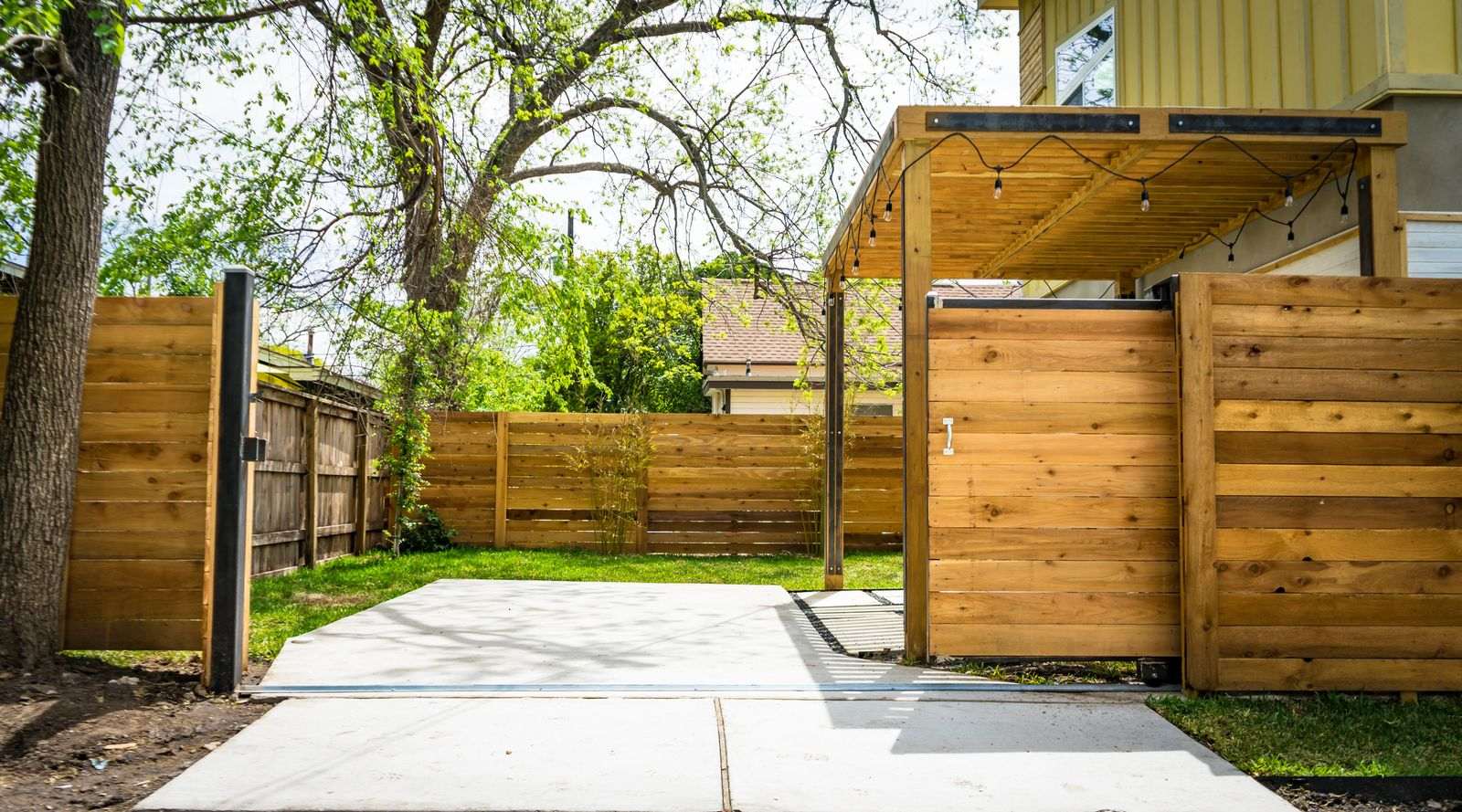
Cedar and other wood look right in most yards and allow the most change in style, but they ask for upkeep. The posts are where wood succeeds or fails. A trimmed post end has to be re-treated with a wood preservative, and the lifespan figure above is for pine posts, not for every wood.
Aluminum is an open picket fence with little upkeep. A product claim to ASTM F2957, the specification for ornamental aluminum fence systems, gives you something to check a quote against. For a pool, picket spacing of 1 3/4 inches or less applies when the rails are under 45 inches apart.
Chain link is the open choice for marking a boundary or holding a pet. It does not screen a yard, and as a pool barrier its mesh must be 1 1/4 inch square or smaller, or slatted to close the openings to 1 3/4 inches.
Watch the posts, rails and gate go up in order
This video from the channel Mr Fence walks through a wood privacy fence from posts to gate. It shows one builder's method, so compare it with the post and gate notes above rather than treating it as a standard.