Gallery: what each fence style looks like built
These are style examples, not jobs. Each picture is a stock photograph chosen to show one thing a reader can check, and each caption says what the frame actually shows.
A picture shows a look, not a build
We say so plainly: nothing on this page shows a fence built for anyone. The two photographs come from a stock library, so they show what a style looks like and not what an installer did. The notes below cover what a photograph leaves out, style by style.
A photograph tells you what a fence looks like, and very little about how it was put together.
Where to look in a fence photograph
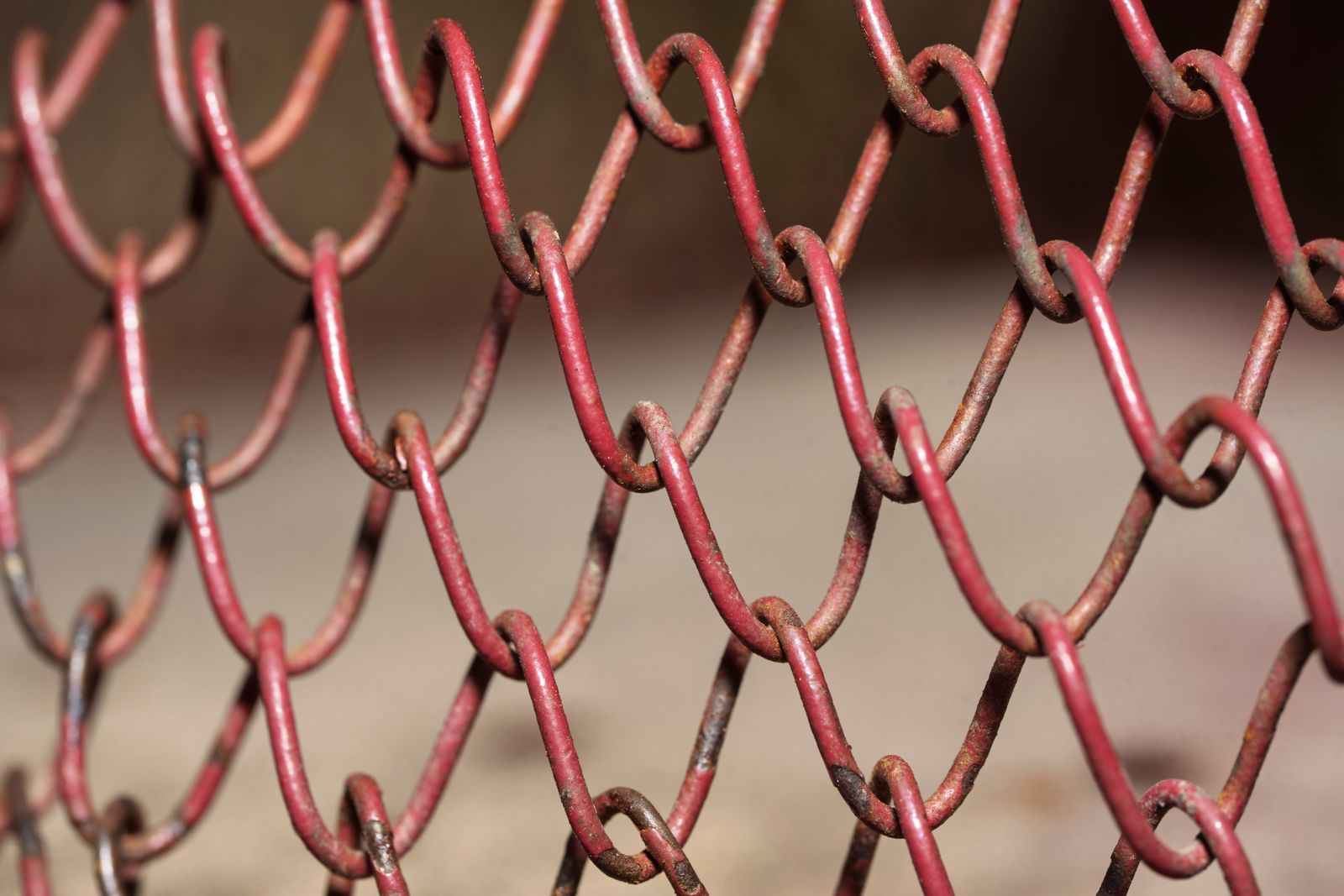
Look at the gaps before the material. On a picket fence the spacing between the pickets decides what can pass through it, and on chain link the size of each opening is the number to read. The pair below shows both points side by side.

The figures a photograph cannot settle
The pool figures come from the Town of Plymouth's printed extract of the Massachusetts pool barrier code, and they apply only to a barrier around a private pool, hot tub or spa. A town may be stricter. The post figure is a University of Kentucky extension figure and is not specific to Massachusetts.
What the pictures leave out, style by style
Vinyl is judged on its profile and on its wind performance. The material standard, ASTM F964, covers material properties, weatherability and extrusion quality, and it states that load-bearing behaviour of the assembled fence is not addressed, so wind has to be asked about separately.
Aluminum with tubular pickets can be checked against ASTM F2957, the specification for that product type, which gives a reader a written standard to put to a supplier.
Wood is judged most on what sits below the ground. A cut end of a treated post has to be re-treated with preservative, and a painted post needs a few months to air-dry before paint goes on, or it can rot under the paint.
Chain link is judged on its mesh and its top rail, which a close-up shows. A picture cannot give the opening size in inches, so measure it or ask for the number in writing.
This page gives no lifespan for cedar, because the sources checked for this guide did not give one a reader could verify.
Why these two pictures
We chose each picture for the one detail it shows clearly: the picket gap and the mesh opening. If the style is still open, the equipment page starts from the job the fence has to do, and the material and height follow from that.